what does it mean to get my car serviced
How frequently do brakes need to be serviced?
Updated: April 22, 2020
Brakes should be replaced when worn out, but how oft do brakes need servicing? Servicing brakes means servicing the brake components (cleaning, lubricating, etc.) without replacing them. Brakes are serviced to make certain they function properly between replacements and the car is safe to bulldoze.
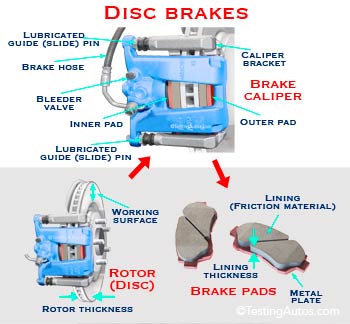 Disc brakes.
Brakes demand to be inspected regularly and serviced when needed: for case, when some of the parts show signs of sticking or seizing upward, or when rust or clay buildup causes brake noises. Some car makers include brake service into the maintenance schedule, others specify that brakes need to be inspected in regular mileage or time intervals; typically every 5,000-7,000 miles or every four-6 months, whichever comes kickoff.
Brakes also demand to be inspected and serviced (or replaced) if they are not working properly, squeak, grind or produce other abnormal noises, or if the restriction pedal doesn't experience "correct." The benefits of servicing brakes are that the restriction pads or shoes vesture more evenly and last longer and the brakes are less probable to squeak. Servicing brakes is especially of import in the "salt belt" because presence of road common salt speeds upward the corrosion of restriction parts.
Most cars on the road today have disc brakes on all four wheels. Some vehicles have drum brakes on the rear wheels. How disc brakes work: the brake pads are installed on both sides of the brake disc (also known equally rotor). When a driver presses the brake pedal, the hydraulic pressure level pushes the piston (or pistons) out of the brake caliper. As a consequence, the ii brake pads squeeze the brake disc betwixt them.
To work properly, the restriction pads have to be able to slide inside the restriction caliper towards and away from the disc.
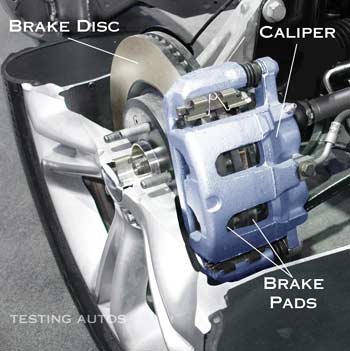 Front disc brakes.
In a brake organization with a floating caliper constitute in about cars (in the photo), the caliper itself also must exist able to slide laterally on its subclass (ballast plate). In this blueprint, the caliper slides on two guide (slide) pins.
The disc brakes endure a lot of heat when braking and can go wet during the rain. As a consequence, the restriction components can rust. Rust buildup may crusade brake pads to stick within the subclass or the brake caliper guide (slide) pins to seize up, meet the photo below. This problem is very common in regions where route salt is used in the winter.
When restriction pads stick, or the caliper seizes up, the brakes might not work properly or not release fully. This will cause the brakes to overheat and the restriction performance will exist compromised.
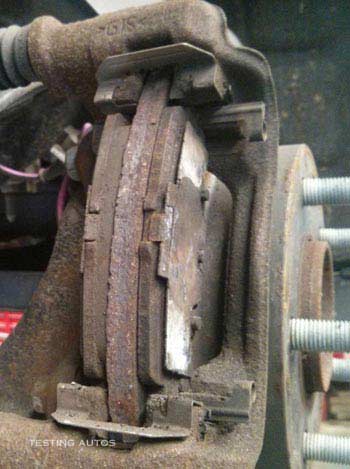 Road salt caused excessive rust buildup in this vehicle. The brake pads were sticking and worn out prematurely. The outer pad is worn more.
The brake caliper might get damaged from overheating and require replacement. For many cars, this outcome is the number 1 cause of premature or uneven brake pad wear and brake caliper replacement. A squeaking racket coming from brakes is one of the possible symptoms of this problem.
Similar problems happen with rear drum brakes: rust on the restriction drums can cause squeaking, and some components, especially the parking brake parts, may seize up due to corrosion or lack of lubrication. In most cars, pulsate brakes accept a cocky-adjusting mechanism that may likewise seize up. In time, a seized cocky-adjuster may cause longer pedal travel. Of class, drum brakes are fully covered by the pulsate, and they usually can concluding longer without servicing.
In nigh service shops and dealerships, mechanics inspect your brakes whenever your wheels are removed when doing a tire rotation or other service. Brakes cannot be properly inspected without removing the wheels. For this reason, nosotros recommend having your brakes properly inspected at to the lowest degree once a yr to proceed your motorcar condom. Check the reviews when choosing the shop; y'all don't desire to trust your brakes to incompetent mechanics.
The restriction inspection typically involves checking the brake components according to the manufacturer's guidelines. For example, measuring the brake pad or restriction shoe textile thickness and inspecting brake discs.
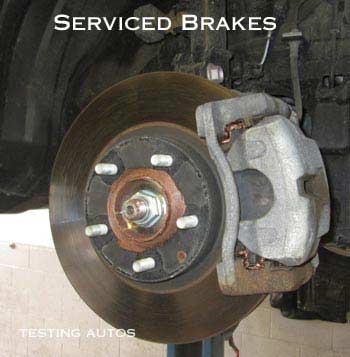 Freshly serviced brakes.
If there are signs that pads or caliper guide (slide) pins are not moving freely, your mechanic may recommend servicing your brakes.
The disc brake service includes removing the pads and calipers, cleaning and lubricating guide pins and the caliper brackets to prevent sticking or seizing. The restriction discs (rotors) might too need to be cleaned out from the surface rust, peculiarly on the edges, to foreclose squeaking. Servicing brakes must as well be done post-obit the manufacturer's instructions.
The rear drum restriction service involves cleaning the components, including the parking brake parts and lubricating parts that need to be lubricated, besides as removing excessive rust buildup from the drums. Rear drum brakes and the parking restriction might too need to be re-adapted.
Should you service the brakes or supplant them? If the brake pads are worn close to the safe limit or the discs are in bad shape, information technology might exist more than price constructive to supercede brakes instead of servicing them. To help you make up one's mind, ask your mechanic or service writer how long the brakes will last if you service them at present.
Is the car safe to drive if you determine not to service brakes, merely rather replace them afterward? What is the toll difference?
How long do the brakes last before they need to be replaced? On average, disc brakes last for thirty,000-fifty,000 miles. Rear drum brakes last longer, sometimes up to 150,000 miles.
How much does a brake service price? Typically a restriction service costs $80-$130 per axle if no parts are replaced. Both brakes on the same axle are always serviced at the same time. If your brake discs or drums are rusted, warped, or worn unevenly, your mechanic may suggest having them machined (resurfaced) on the restriction lathe. This costs more. Warped or unevenly worn brake discs or drums cause steering vibration and brake pedal pulsation while braking.
Source: https://www.testingautos.com/car_care/how-often-to-service-brakes.html

Post a Comment for "what does it mean to get my car serviced"